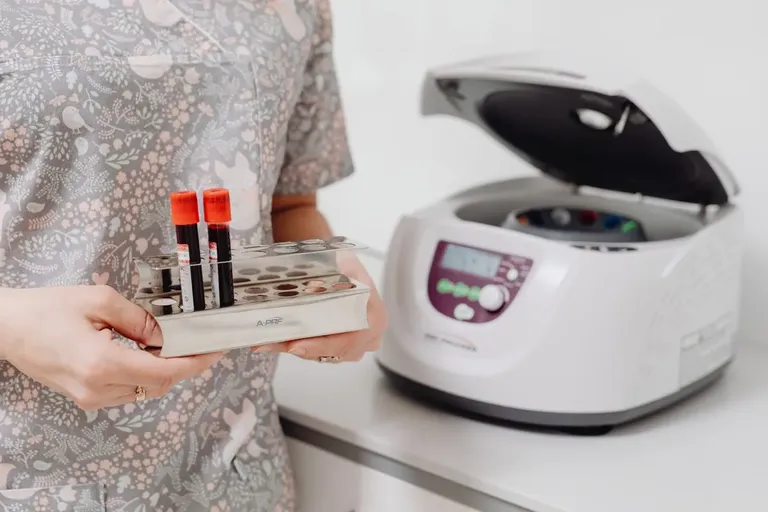
Home Blood Testing vs Private Clinic vs NHS: Pros and Cons
There are three ways to get a blood test in the UK: ask your GP and wait, book into a private clinic, or post a finger-prick kit to yourself. All three measure the same blood. They differ in cost, speed, how much blood they take, and who interprets the result. Here is an honest look at each route, including where the cheap home kits fall short.
If you already know your shape of question, here’s the short version. Something feels wrong: start with the NHS, and our lookup guide shows what the NHS will and won’t test. Want a broad check in one appointment: browse clinic tests. Tracking a number or two: browse home tests. The reasoning behind each is below.
The NHS: free, thorough, and slow
A GP-ordered blood test costs you nothing. The phlebotomist takes a proper vial of blood from a vein, an NHS lab analyses it, and your GP gets the results and explains what they mean. For anything that might be serious, this is the right route, full stop.
The trade-offs are time and choice. You usually need an appointment with the GP first, then a separate blood draw, then another wait for results. Routine tests can take weeks from start to finish. And the NHS tests what it has a clinical reason to test. If you want a vitamin D level checked out of curiosity, or a hormone panel because you’re tracking your training, your GP may well decline. That’s not gatekeeping for its own sake; the NHS has to justify every test against its own budget.
Pros: free, venous sample, results interpreted by a doctor who knows your history, no price shopping. Cons: waiting lists, limited test menu, repeated visits for what is often a five-minute procedure.
Private clinics: a real needle, same-day answers
Companies like Bluecrest Wellness and Randox Health run permanent clinics and visiting health events where a nurse or phlebotomist draws blood properly. Randox has permanent centres, and Bluecrest runs over 400 event locations around the UK. Results typically come back within days.
The advantage over home kits is sample quality. A venous draw gives the lab more blood to work with, which matters for full panels and for any marker where accuracy really counts. You also get a wider screen in one sitting: a full health MOT covering cholesterol, liver, kidney, iron, hormones and more. Bluecrest’s Active Health MOT starts at £179, and single tests start around £65. Randox clinic packages start at £227.
The downsides are price and travel. You pay several times what a home kit costs, and you have to get to a clinic or event location, which is awkward if you live rurally. Some people also just don’t like needles in a clinical chair; fair enough.
Pros: venous sample, comprehensive screens, fast results, nurse on hand to answer questions. Cons: £65 to £227+, you travel to them, appointments at set times.
Home kits: cheap, quick, and honest about their limits
This is the fastest-growing part of the market, and the prices explain why. MyHealthChecked rapid tests start at £8 in Boots. Medichecks has a testosterone test at £19 and a thyroid panel at £45. Thriva, Forth, Numan, Vitall and LetsGetChecked all post you a kit; you lance a fingertip, spot a few drops onto a card, and post it back. Results land in your inbox in 1 to 3 days for most providers.
For single markers like vitamin D, ferritin, testosterone or HbA1c, a finger-prick sample is genuinely good enough. These are the tests people repeat every few months to track a trend, and at £8 to £45 a time, the maths works.
Where home kits struggle is big panels and small samples. Squeezing enough blood from a fingertip is harder than it sounds; a clotted or short sample is the most common reason a kit gets rejected and you have to redo it. Some markers are also less reliable from a spot sample than from a vein. If a home result comes back wildly abnormal, treat it as a prompt to get a proper draw, not a diagnosis.
Pros: from £8, no appointment, no travel, results in days, easy to repeat for tracking. Cons: small sample, occasional rejected kits, limited panel depth, nobody medical on hand when you open the results.
Side by side
| NHS | Private clinic | Home kit | |
|---|---|---|---|
| Cost | Free | From about £65 | From £8 |
| Sample | Venous draw | Venous draw | Finger prick |
| Time to results | Weeks | 1 to 4 days | 1 to 3 days |
| Appointments needed | 2 to 3 | 1 | 0 |
| Test menu | Whatever is clinically justified | Wide screens and singles | Singles and small panels |
| Interpretation | Your GP | Provider report, GP if flagged | You, with a report |
So which one should you pick?
It depends on the question you’re asking.
If something feels wrong and it might be serious, see your GP. Free beats fast when the stakes are high, and your GP can act on the result.
If you want a broad picture of your health once a year, a clinic MOT is worth the money. Getting 30-plus markers from one proper blood draw, with a nurse present, is a better experience than four separate finger-prick kits.
If you’re tracking one or two numbers over time, like vitamin D through winter or testosterone on a training programme, a home kit is the sensible choice. Cheaper, repeatable, and good enough for the job.
Many people end up using all three: the NHS for anything concerning, a clinic screen once a year, and home kits to fill the gaps in between.
You can browse each route by price on our home tests and clinic tests pages.
To compare home test prices across every provider we track, visit our compare page to look at testosterone, vitamin D or thyroid tests.
Popular home tests and what they cost
| Test | Cheapest price | Provider |
|---|---|---|
| Vitamin D rapid test | £8 | MyHealthChecked |
| Ferritin (iron) rapid test | £8 | MyHealthChecked |
| Testosterone blood test | £19 | Medichecks |
| At-home vitamin D kit | £29.99 | BetterYou |
| Thyroid blood test | £45 | Medichecks |
Prices verified September 2026. Compare the full range on our compare page.
A note on interpreting results
Whichever route you take, a number on a PDF is not the same as medical advice. Home providers give you a report and some offer GP follow-up for flagged results, but nobody chases you. If anything comes back outside range and you have symptoms, book the GP appointment and take the report with you. That combination, private testing for the data and the NHS for the decisions, is the best of both.
Header image from Pexels