Is a Home Cholesterol Test Worth It? Instant Kits vs Lab Panels
A cholesterol test kit on Amazon costs £9. A full lipid profile from a private provider costs £39. Both use a finger-prick. Both claim to tell you where your cholesterol stands. So why would anyone pay four times as much for the same drop of blood?
The short answer is that they are not measuring the same thing, and the gap matters when you are spending real money to understand your heart health.
What a £9 Cholesterol Strip Tells You
The cheapest home cholesterol kits use a colourimetric test strip: you prick your finger, put a drop of blood on the strip, wait a few minutes, and read the colour change against a chart. Some give a numeric reading on a small meter. Almost all of them at this price point measure one thing: total cholesterol.
Total cholesterol is useful as a starting point, but it is the least informative number on a full lipid panel. A total cholesterol of 4.8 mmol/L sounds fine (NHS recommends under 5), but it could be hiding a high LDL and low HDL that puts your heart at risk. You just cannot see that split from a total-only strip.
Better home monitors cost more. Some branded meters like Mission Cholesterol (£308 from Connect2Pharma) or the PTS Diagnostics CardioChek measure total cholesterol, HDL, LDL, and triglycerides from a single drop. That gets closer to what a lab lipid profile gives you, though Which? tested 12 of these devices in 2026 and found accuracy varied noticeably between models.
The devices with CE marking performed significantly better. A CE mark means the device has passed EU medical-device standards for safety and performance. But even the best home meter is still reading from a finger-prick capillary sample, which has known limitations compared to a venous blood draw.
The Amazon UK cholesterol kits we compared
Here are the specific cholesterol kits sold on Amazon UK and linked in our earlier comparison of Amazon finger-prick kits vs provider lab tests:
| Product | Type | Rating | Price | Link |
|---|---|---|---|---|
| One Step | Total Cholesterol (2 tests) | ★★★★★ 4.2 (112) | £9.99 | Buy on Amazon£9.99 |
| Qucare | Total Cholesterol (2 tests) | ★★★★★ 4.0 (1,163) | £8.99 | Buy on Amazon£8.99 |
| Newfoundland Diagnostics | Total Cholesterol (1 test) | ★★★★★ 4.0 (229) | £8.99 | Buy on Amazon£8.99 |
| PocDoc | Healthy Heart Check (companion app) | ★★★★★ 3.3 (54) | £17.09 | Buy on Amazon£17.09 |
What the NHS and Heart UK Say
Three major UK health organisations have weighed in on home cholesterol testing. NHS advice is clear: home test results are not a substitute for professional medical assessment. The British Heart Foundation warns that self-sampling can produce insufficient or lower-quality blood samples. Heart UK, the cholesterol charity, says a home result should be treated as a starting point, not a diagnosis.
The consistent thread across all three is the same: a single finger-prick reading from a consumer device is not enough to base medical decisions on, especially something like whether to start a statin. For that, you need a laboratory-processed venous sample, ideally from a fasted state.
What a Lab Lipid Profile Actually Measures
When you order a cholesterol test from a private provider like Medichecks or Numan, you get a full lipid profile processed in a UKAS-accredited lab. That means:
- Total cholesterol
- HDL cholesterol (the “good” kind — higher is better)
- LDL cholesterol (the “bad” kind that blocks arteries)
- Non-HDL cholesterol (total minus HDL)
- Triglycerides (blood fats linked to diet and alcohol)
- Total/HDL ratio
The lab reports all these numbers individually, against reference ranges, with a clinician-reviewed report. A good home meter might give you three of these numbers, but the accuracy depends on your sampling technique, the device calibration, and whether you fasted beforehand. A lab result is the gold standard.
Which? found that send-away lab kits (where you prick your finger, collect the blood on a card, and post it to a lab) were consistently more accurate than instant-read digital meters. That makes sense: the lab equipment is standardised, the analysis is controlled, and your sample is measured against calibrated reagents rather than a colour strip.
The Real Differences at a Glance
| Factor | Home instant kit | Lab-return kit | Private lab panel |
|---|---|---|---|
| Price | £9–£17 | £49 | £39–£89 |
| Markers | Total only, or total+HDL+LDL+TG | Full lipid profile | Full lipid profile + ratio |
| Accuracy | Variable (CE-marked = better) | Lab-grade | Lab-grade (gold standard) |
| Fasting needed | Some require it | Yes, for triglycerides | Yes, for triglycerides |
| Result time | 2–10 minutes | 3–5 days | 3–5 days |
| Clinician review | No | No (some providers include it) | Yes (most providers include it) |
So When Is a Home Kit Worth It?
A £9 total cholesterol strip is worth exactly what it costs. If all you want is a rough idea whether your cholesterol is obviously high, say you are curious between NHS Health Checks, it gives you a number. But that number is incomplete, and a normal total cholesterol reading can easily miss a problem.
A £17 meter that gives you total, HDL, and an estimated LDL is a step up. If you have already been diagnosed with high cholesterol and are monitoring whether lifestyle changes are working between lab tests, it can show you the direction of travel. The CE-marked models from the Which? testing did reasonably well on repeat measurements.
A lab-return kit at £49 is the worst of both worlds: you pay near-lab prices for near-lab accuracy, but you still do not get the venous-sample gold standard. At that price, you might as well pay £39 for a proper lab panel from Medichecks or Numan and get a clinician-reviewed report.
To compare cholesterol test prices across all providers side by side, visit our compare page to look at cholesterol or heart health panels.
What Private Lab Cholesterol Panels Cost
| Provider | Test | Price | Link |
|---|---|---|---|
| Medichecks | Cholesterol Blood Test | £39 | View test£39 |
| Numan | Cholesterol Blood Test | £41 | View test£41 |
| YorkTest | Cholesterol Test | £41 | View test£41 |
| MyHealthChecked | Cholesterol Profile | £45 | View test£45 |
| Goodbody | Cholesterol Blood Test | £49 | View test£49 |
| LetsGetChecked | Cholesterol Test | £79 | View test£79 |
| Forth | Advanced Cholesterol Test | £89 | View test£89 |
At £39, Medichecks is the cheapest option for a full lab-analysed lipid profile with a clinician-reviewed report. That works out around the same price as a lab-return kit from Amazon but with proper oversight.
What If Your Results Are High?
If your cholesterol results come back high from any test, home kit or lab, do not panic. The first step is a confirmatory lab test if you used a home kit. Once confirmed, there is plenty you can do.
Dietary changes are the first line of defence. Cut saturated fats (red meat, butter, cheese, processed foods) and eat more soluble fibre (oats, barley, beans, apples). The Mediterranean diet has the strongest evidence for lowering cholesterol.
Exercise helps. The NHS recommends 150 minutes of moderate activity per week — brisk walking counts. Even small amounts of regular movement lower LDL and raise HDL.
If lifestyle changes are not enough, your GP may recommend a statin. Heart UK and the 2026 cholesterol guidelines now recommend earlier intervention in some cases, especially if your LDL is above 4.1 mmol/L.
Test again in three to six months to see whether your changes are working. That is where private testing helps: you can order a repeat without waiting for a GP appointment.
The Bottom Line
For a one-off check, pay the £39 for a proper lab test. The £9 instant strip tells you less than you think, and a normal total cholesterol can hide a problem. If you already know your numbers and want to track changes between lab tests, a CE-marked home monitor can show you the trend. But for any decision about medication or risk, the lab is still the right answer.
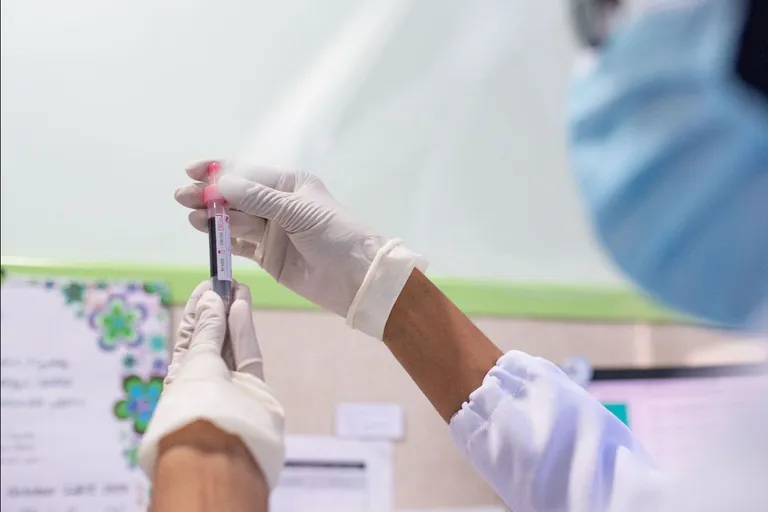
Header image from Pexels
Disclaimer: This article is for informational purposes only and is not a substitute for professional medical advice. Always consult a GP or qualified healthcare provider before making decisions about your health.