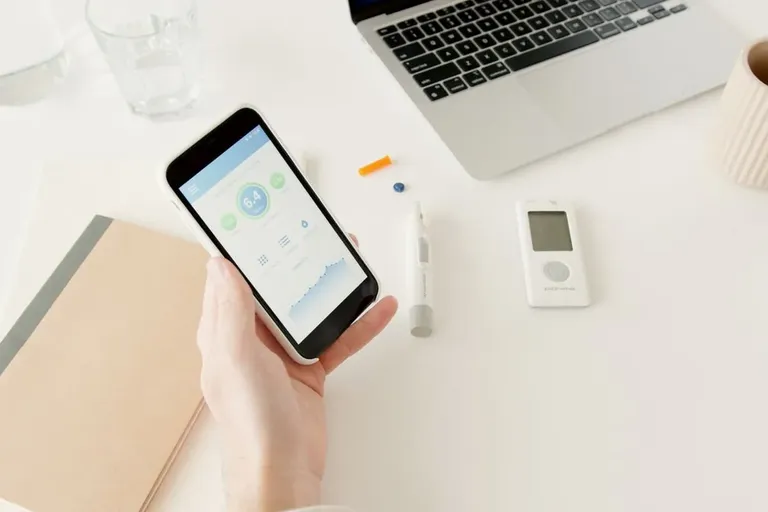
Rapid At-Home Blood Tests: What They Reveal
Waiting several days for a blood test result can feel like a long time when you are worried about a symptom. Rapid at-home tests offer a different approach. You prick a finger, add a drop of blood to a strip or cassette, and read the result within minutes.
That speed is useful, but it does not make every rapid test a substitute for laboratory testing. The right choice depends on what you are trying to find out, how reliable the result needs to be, and what you will do next.
What is a rapid at-home blood test?
A rapid test is usually a small, single-use in-vitro diagnostic device. It analyses a sample outside the body, often using capillary blood from a finger prick. Some home tests use urine or oral fluid instead, but the principle is similar: the device produces a result without sending a sample to a laboratory.
The familiar examples include blood glucose meters and strips, some cholesterol and HbA1c tests, and certain HIV self-tests. A positive pregnancy test is another well-known rapid test, although it uses urine rather than blood. The device may show a number, a colour change, or lines on a test cassette.
These tests measure a limited marker or group of markers. A cholesterol strip may estimate total cholesterol, while an HbA1c test looks at glycated haemoglobin, which reflects average blood glucose over roughly the previous two to three months. A basic rapid test cannot provide the broad picture you would get from a full blood count, liver profile, thyroid panel, or laboratory lipid profile.
What can you test at home without sending a sample away?
Blood glucose and diabetes checks
A glucometer gives a reading of your blood glucose at that moment. It is useful for monitoring diabetes when you have been advised to do so, but one reading cannot diagnose diabetes. Food, exercise, stress, illness and medication can all affect it.
Some at-home HbA1c kits provide a result quickly, but check exactly what the product claims to do. A screening result is not the same as a diagnosis. The NHS says type 2 diabetes is diagnosed with a blood test and advises speaking to a GP if you are concerned about symptoms or risk.
Cholesterol
Rapid cholesterol tests can provide a quick indication of total cholesterol, and some devices also estimate HDL, LDL or triglycerides. The number can be helpful as a starting point, particularly if you are monitoring a known issue. It may not be enough for a clinician to calculate your full cardiovascular risk or decide on treatment.
For a wider picture, you can compare cholesterol blood tests from UK providers. These usually involve a finger-prick sample that is sent to a laboratory, rather than an instant result.
HIV and other infection self-tests
Some HIV self-tests use a finger-prick blood sample, while others use oral fluid. Depending on the product, the result can appear in about 20 minutes or less. A reactive result is not a diagnosis and needs prompt confirmation through a sexual health service or clinician. A negative result can also be misleading if the test was taken during the window period after exposure.
If you think you may have been exposed to HIV recently, do not rely on a home kit for urgent advice. Contact NHS 111, a sexual health clinic, or another qualified healthcare professional. For symptoms or a possible STI, a clinic or NHS service can advise on the correct test and timing.
Thyroid and other hormone tests
You may see rapid strips marketed for thyroid or hormone checks, but these are less interchangeable with laboratory blood tests than a glucose meter is. Thyroid assessment often depends on more than one result, including TSH and free thyroid hormones, alongside your symptoms and medical history. A home strip that only gives a rough indication cannot replace that assessment.
If you want a fuller result, you can compare thyroid blood tests or hormone blood tests, including tests that are analysed by a laboratory.
Rapid tests versus traditional laboratory blood tests
| Rapid at-home test | Traditional laboratory blood test | |
|---|---|---|
| Result time | Often a few minutes | Commonly a few days, depending on the provider and test |
| Sample | Usually a small finger-prick sample | Finger-prick or venous blood draw |
| What it measures | One marker or a narrow set of markers | Can measure a wider panel with specialist equipment |
| Convenience | Private, quick and no appointment for many kits | May involve a clinic visit, phlebotomy or posting a sample |
| Accuracy | Varies with the device, storage, technique and timing | Usually more controlled, with laboratory quality checks |
| Best use | Monitoring or an initial indication | Diagnosis, detailed investigation and clinical decisions |
Pros of rapid at-home tests
The main benefit is speed. You can get an immediate indication instead of waiting for a courier and laboratory report. That can be useful for routine monitoring or deciding whether to seek further advice.
They are also convenient and private. A kit can be used at home, often at a lower upfront cost than a clinic appointment. For someone who dislikes needles or finds appointments difficult, a simple finger prick may make testing more realistic.
Rapid tests can support regular monitoring. For example, someone managing diabetes may use a glucose meter several times a day, with their healthcare team helping them understand patterns over time.
Cons and limitations
The result can be affected by technique. Too little blood, an incorrectly timed reading, an expired strip, poor storage, cold fingers or a contaminated sample can all produce an unreliable answer. Read the instructions carefully and repeat a questionable test rather than treating it as fact.
A rapid test may also miss a condition or give a result that needs confirmation. False negatives are a particular concern when testing early in an infection or when a marker is close to a decision threshold. False positives can cause unnecessary worry. Results that are unexpected, reactive or inconsistent with how you feel should be discussed with a healthcare professional.
Cost is not always lower. A single strip may be inexpensive, but a meter can require repeat purchases of compatible strips and lancets. A laboratory test may cost more at the start but provide several markers and a written report that is easier to review with a clinician.
Finally, an instant result does not come with interpretation. A number on a screen cannot account for your symptoms, medicines, family history or other test results. That context matters, particularly for thyroid disease, diabetes, infection and hormone problems.
How to choose a safer home test
Buy from a reputable UK supplier and check that the device has the appropriate CE, UKCA or CE UKNI marking. UK government guidance says medical devices for personal use should carry one of these marks, although no device is completely reliable. Check the expiry date, packaging, storage instructions and manufacturer details before you use it.
Choose a test that says exactly what it measures and what its result means. Be cautious of products promising to assess lots of unrelated conditions from one tiny drop of blood. Follow the instructions, record the result and avoid changing medication or supplements based on a home reading alone.
A rapid test is best treated as one piece of information. If you have worrying symptoms, a persistently abnormal reading, or a result that could indicate an infection, arrange proper medical advice. In an emergency, use NHS services rather than waiting for a home test.
The practical answer
Rapid at-home tests are useful when you need a quick reading for a narrow purpose, especially glucose monitoring. They are less suitable when you need a diagnosis or a broad investigation. Laboratory testing takes longer, but it usually gives a more controlled measurement and more information for a clinical decision.
If you are comparing broader private testing options, visit our compare page to look at diabetes and HbA1c tests, cholesterol tests or thyroid tests.
Header image from Pexels
This article is for general information and is not a diagnosis or a substitute for medical advice. Speak to a GP, pharmacist, sexual health clinic or other qualified healthcare professional about your symptoms and results.
Sources
- NHS: symptoms of type 2 diabetes and how it is diagnosed
- GOV.UK: medical devices information for patients
- GOV.UK: regulating medical devices in the UK
- NHS: HIV and AIDS
Disclaimer
Head to Head is a comparison website, not a medical service. Always seek professional advice about symptoms, diagnosis and treatment.